Repmold: The Complete Guide to Digital-Driven Molding and Smart Manufacturing
Modern manufacturing has changed dramatically over the past decade. Companies no longer rely only on slow production methods that require months of planning and expensive tooling before a product reaches the market. Instead, manufacturers now use digital technologies to shorten development time, improve product quality, and reduce production costs.
One concept gaining attention in this transformation is repmold.
Repmold is a digital-driven molding and replication process that allows manufacturers to design, test, improve, and produce components much faster than many traditional manufacturing methods. Rather than depending entirely on manual processes, repmold combines digital design software, advanced molding techniques, automation, simulation, and rapid production technologies to create accurate parts with greater efficiency.
Although the term repmold is still emerging and may not yet have a universally accepted industry definition, it generally represents a modern manufacturing approach focused on intelligent mold development and digital replication. The concept fits well with Industry 4.0, where smart factories use connected machines, artificial intelligence, cloud computing, sensors, robotics, and data analytics to optimize every stage of production.
Manufacturers across industries are searching for ways to reduce production costs while increasing product quality. Repmold supports this goal by allowing engineers to identify design issues early, improve molds before mass production, minimize material waste, and shorten product development cycles.
As customer expectations continue to rise and product life cycles become shorter, businesses need manufacturing methods that are both flexible and scalable. Repmold helps meet these demands by creating an efficient bridge between digital product development and physical manufacturing.
This guide explains everything you need to know about repmold, including how it works, its benefits, technologies, applications, advantages, limitations, future trends, and why it is becoming an important part of modern manufacturing.
What Is Repmold?
Repmold is a digitally managed molding and replication process that integrates computer-based design, engineering analysis, automated manufacturing, and precision molding to create components quickly and accurately.
Unlike traditional molding processes that often require lengthy manual adjustments, repmold emphasizes digital planning before production begins. Engineers build virtual models, perform simulations, optimize mold designs, and test manufacturing conditions digitally before creating the physical mold.
This digital-first approach significantly reduces trial-and-error during manufacturing.
The primary goal of repmold is to improve production speed while maintaining consistent quality.
A typical repmold workflow includes:
- Digital product design
- Computer-aided engineering simulations
- Mold optimization
- Prototype development
- Automated production
- Quality inspection
- Continuous performance improvement
Rather than treating manufacturing as separate stages, repmold connects every step into one integrated workflow.
Understanding the Core Concept Behind Repmold
At its heart, repmold is built around digital replication.
Instead of repeatedly redesigning molds from scratch, engineers create intelligent digital models that can be updated, modified, and reused across multiple production cycles.
This provides several advantages:
- Faster design updates
- Better product consistency
- Reduced engineering effort
- Improved production planning
- Lower tooling costs
- Faster product launches
Digital replication also allows manufacturers to create multiple design variations without rebuilding entire production systems.
Also Read:OncePik: The Complete Guide to Smart Tech, Lifestyle, Trends, and Home Improvement
For companies producing customized products, this flexibility is especially valuable.
How Repmold Works
Understanding the repmold process helps explain why it is becoming popular in advanced manufacturing.
Step 1: Digital Product Design
Everything begins with a digital model.
Engineers use Computer-Aided Design (CAD) software to create a detailed 3D representation of the component.
This digital model includes:
- Dimensions
- Material requirements
- Surface finishes
- Structural details
- Assembly features
- Manufacturing tolerances
Since everything exists digitally, changes can be made quickly without rebuilding physical prototypes.
Step 2: Engineering Simulation
Before creating the mold, engineers simulate how the product will behave during manufacturing.
Simulation software analyzes:
- Material flow
- Heat distribution
- Cooling time
- Pressure points
- Potential defects
- Structural strength
This stage allows problems to be solved before production starts.
Instead of discovering defects after thousands of parts have been manufactured, engineers identify them during digital testing.
Step 3: Mold Design Optimization
Once simulations are complete, the mold itself is optimized.
Engineers improve:
- Cooling channels
- Gate locations
- Venting systems
- Mold geometry
- Material flow paths
Optimization reduces defects while improving production speed.
Step 4: Rapid Prototype Development
Many repmold systems include rapid prototyping.
Technologies such as 3D printing produce early versions of the product for evaluation.
These prototypes help verify:
- Size
- Appearance
- Functionality
- Assembly compatibility
- User experience
Prototype testing often reveals small improvements before expensive tooling begins.
Step 5: Mold Manufacturing
After validation, the physical mold is produced using precision machining technologies.
These may include:
- CNC machining
- Electrical discharge machining (EDM)
- Laser machining
- Hybrid manufacturing systems
Modern equipment produces highly accurate molds with tight tolerances.
Step 6: Automated Production
The mold enters production.
Automation systems monitor:
- Injection pressure
- Material temperature
- Cooling time
- Cycle duration
- Machine performance
Sensors continuously collect production data.
If a problem occurs, operators receive alerts immediately.
Step 7: Quality Inspection
Finished products undergo automated quality inspection.
Advanced inspection methods include:
- Laser scanning
- Vision systems
- Coordinate measuring machines
- Digital surface analysis
- AI-powered defect detection
Only components meeting quality standards move to the next production stage.
Step 8: Continuous Improvement
Unlike traditional manufacturing, repmold does not stop after production begins.
Production data continues to improve future manufacturing cycles.
Engineers analyze:
- Defect rates
- Production speed
- Material usage
- Equipment efficiency
- Customer feedback
This creates a continuous improvement loop.
Key Technologies Behind Repmold
Repmold combines several advanced manufacturing technologies into one integrated system.
Computer-Aided Design (CAD)
CAD software creates precise digital product models.
Engineers can quickly modify dimensions, materials, and design features without rebuilding prototypes.
Computer-Aided Engineering (CAE)
CAE software performs virtual testing.
Instead of physical experiments, engineers simulate product behavior digitally.
This saves time and reduces development costs.
Computer-Aided Manufacturing (CAM)
CAM software converts digital designs into manufacturing instructions.
Machines automatically create molds with high precision.
3D Printing
Additive manufacturing supports rapid prototyping.
Engineers can evaluate designs within hours rather than weeks.
Industrial Automation
Automation improves consistency throughout production.
Robotic systems perform repetitive tasks with greater accuracy than manual operations.
Artificial Intelligence
AI analyzes production data.
Machine learning algorithms identify trends, predict maintenance needs, and improve manufacturing decisions.
Industrial Internet of Things (IIoT)
Connected sensors continuously monitor equipment.
Real-time monitoring reduces downtime and improves production efficiency.
Cloud Computing
Cloud platforms store manufacturing data securely.
Engineering teams across multiple locations can collaborate using the same digital models.
Major Benefits of Repmold
The popularity of repmold continues to grow because it offers practical business advantages.
Faster Product Development
Digital workflows reduce design time dramatically.
Companies can launch products faster than competitors.
Improved Product Quality
Virtual testing identifies defects before manufacturing starts.
This leads to better consistency and fewer product failures.
Reduced Manufacturing Costs
Although digital systems require investment, long-term savings are significant.
Savings come from:
- Less material waste
- Fewer production errors
- Lower labor costs
- Reduced maintenance
- Faster production cycles
Higher Production Efficiency
Automation keeps machines operating consistently.
Production schedules become more predictable.
Greater Design Flexibility
Digital models can be modified quickly.
Manufacturers respond faster to customer requests and market changes.
Lower Risk
Simulation reduces uncertainty.
Potential manufacturing problems are solved before production begins.
Better Sustainability
Efficient manufacturing uses fewer raw materials and less energy.
Lower waste supports environmental goals.
Industries Using Repmold
Repmold is suitable for many industries requiring precision manufacturing.
Automotive Manufacturing
Car manufacturers use repmold to produce:
- Dashboard components
- Engine covers
- Interior panels
- Plastic housings
- Lighting systems
- Air duct components
Rapid design improvements allow manufacturers to introduce new vehicle models more efficiently.
Medical Device Manufacturing
Healthcare products require exceptional accuracy.
Repmold supports production of:
- Diagnostic equipment
- Surgical tools
- Medical housings
- Laboratory devices
- Protective equipment
Digital validation helps meet strict quality standards.
Consumer Electronics
Electronic products evolve rapidly.
Manufacturers use repmold to create:
- Smartphone casings
- Tablet enclosures
- Laptop components
- Wearable devices
- Smart home products
Short development cycles are essential in this industry.
Aerospace
Aircraft manufacturers require lightweight, high-performance components.
Digital simulations improve structural reliability while reducing unnecessary weight.
Industrial Equipment
Factories use repmold to manufacture:
- Machine covers
- Equipment housings
- Mechanical components
- Safety guards
- Custom industrial parts
Industrial customers benefit from consistent product quality.
Packaging Industry
Packaging companies produce large numbers of identical products.
Repmold improves:
- Bottle molds
- Food containers
- Protective packaging
- Cosmetic packaging
- Pharmaceutical containers
Optimized molds increase production speed while reducing material waste.
Challenges and Limitations of Repmold
While repmold offers many advantages, it is not without challenges. Organizations should understand these limitations before adopting a digital-driven molding strategy. Proper planning, employee training, and investment are necessary to achieve the best results.
High Initial Investment
Implementing repmold often requires purchasing advanced equipment, software, and automation systems. These investments may include:
- CAD and CAM software
- CNC machines
- Industrial robots
- Quality inspection systems
- Data management platforms
- Employee training programs
Although the upfront cost can be high, many manufacturers recover their investment over time through increased efficiency, lower waste, and faster production.
Need for Skilled Professionals
Modern digital manufacturing relies on experienced engineers, designers, machine operators, and software specialists.
Employees must understand:
- Digital product design
- Manufacturing simulations
- Automated production systems
- Quality control methods
- Data analysis
Without proper training, companies may struggle to maximize the benefits of repmold.
System Integration Challenges
Many manufacturers already operate traditional production equipment.
Integrating older machines with modern digital technologies can sometimes be difficult. Companies may need additional hardware or software to connect legacy equipment with new digital systems.
Cybersecurity Risks
As manufacturing becomes more connected, protecting digital information becomes increasingly important.
Manufacturers should safeguard:
- Product designs
- Customer information
- Production data
- Intellectual property
- Factory networks
Strong cybersecurity practices help reduce the risk of unauthorized access or data loss.
Maintenance Requirements
Advanced manufacturing equipment requires regular maintenance to maintain peak performance.
Preventive maintenance programs help reduce unexpected downtime and extend equipment life.
Repmold vs. Traditional Molding
Understanding the differences between repmold and conventional molding helps manufacturers determine which approach best fits their production goals.
| Feature | Repmold | Traditional Molding |
| Design Process | Fully digital | Mostly manual |
| Prototyping | Fast digital prototypes | Physical prototypes |
| Production Speed | High | Moderate |
| Design Changes | Quick and flexible | Time-consuming |
| Quality Control | Automated inspections | Manual inspections |
| Material Waste | Low | Higher |
| Data Collection | Real-time monitoring | Limited |
| Automation | Extensive | Limited |
| Long-Term Efficiency | Very high | Moderate |
Traditional molding remains useful for some manufacturing situations, especially where production volumes are stable and product designs rarely change.
However, industries with frequent product updates increasingly prefer repmold because of its flexibility and efficiency.
How Repmold Supports Industry 4.0
Industry 4.0 represents the fourth industrial revolution, where manufacturing relies heavily on digital technologies and connected systems.
Repmold naturally fits into this environment because it combines digital engineering with intelligent manufacturing.
Some Industry 4.0 technologies used in repmold include:
Smart Manufacturing
Machines communicate with one another and share production data automatically.
This improves coordination across the factory.
Connected Sensors
Sensors continuously monitor production conditions such as:
- Machine temperature
- Pressure
- Vibration
- Humidity
- Production speed
Operators receive real-time information that helps prevent equipment failures.
Data Analytics
Manufacturing systems generate enormous amounts of data.
Engineers analyze this information to identify:
- Production bottlenecks
- Quality trends
- Equipment performance
- Material usage
- Energy consumption
These insights support better business decisions.
Also Read:Antarvafna: The Complete Guide to Ancient Indian Self-Reflection and Inner Peace
Cloud-Based Collaboration
Engineering teams working in different locations can access the same digital product models.
This improves collaboration between:
- Designers
- Manufacturing engineers
- Suppliers
- Quality teams
- Customers
Cloud platforms also simplify document management and version control.
The Role of Artificial Intelligence in Repmold
Artificial Intelligence (AI) is becoming one of the most valuable technologies within digital manufacturing.
Rather than replacing engineers, AI assists them by processing large amounts of production data much faster than humans can.
Predictive Maintenance
AI can predict when equipment may require maintenance before a breakdown occurs.
This reduces:
- Unexpected downtime
- Repair costs
- Production delays
Defect Detection
Computer vision systems powered by AI inspect products with exceptional speed and accuracy.
Even tiny defects that may be difficult for the human eye to notice can be detected automatically.
Process Optimization
AI continuously evaluates manufacturing conditions and recommends improvements such as:
- Faster cycle times
- Better cooling strategies
- Improved material flow
- Lower energy consumption
Demand Forecasting
AI can also analyze customer demand and production trends.
Manufacturers can better plan inventory, staffing, and production schedules.
Digital Twins in Repmold
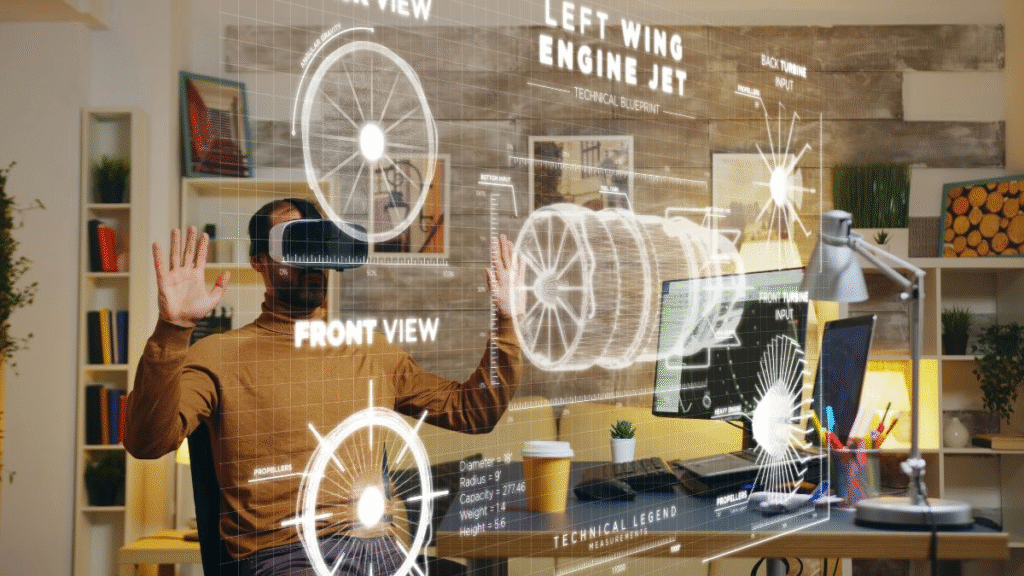
One of the most exciting developments in modern manufacturing is the use of digital twins.
A digital twin is a virtual copy of a physical product, mold, or manufacturing system.
Instead of observing only the real production line, engineers can monitor the digital version simultaneously.
Digital twins allow manufacturers to:
- Simulate production changes
- Test process improvements
- Predict equipment failures
- Improve maintenance planning
- Optimize manufacturing performance
As digital twin technology becomes more affordable, it is expected to become a standard part of advanced repmold systems.
Sustainability Benefits of Repmold
Environmental responsibility has become an important goal for manufacturers worldwide.
Repmold supports sustainable manufacturing in several ways.
Reduced Material Waste
Digital simulations minimize production errors.
Fewer defective parts mean less wasted material.
Lower Energy Consumption
Optimized production cycles reduce machine operating time.
Efficient equipment also consumes less electricity.
Longer Mold Life
Better mold design reduces wear and extends tool lifespan.
This decreases the need for frequent replacements.
Improved Resource Planning
Digital production scheduling helps manufacturers purchase only the materials they need.
This reduces excess inventory and unnecessary waste.
Support for Recyclable Materials
Many repmold systems are compatible with recyclable plastics, biodegradable materials, and environmentally friendly manufacturing practices.
Best Practices for Successful Repmold Implementation
Organizations considering repmold should follow several best practices to maximize success.
Start with Clear Production Goals
Before investing in new technology, companies should identify their objectives.
Examples include:
- Reducing production costs
- Improving product quality
- Increasing manufacturing speed
- Supporting product customization
Clear goals guide technology selection.
Invest in Employee Training
Technology alone cannot guarantee success.
Employees should receive ongoing education in:
- Digital manufacturing
- Automation
- CAD software
- Quality management
- Data analysis
A knowledgeable workforce adapts more easily to new manufacturing systems.
Choose Scalable Solutions
Production needs change over time.
Selecting scalable software and equipment allows manufacturers to expand operations without replacing entire systems.
Use Real-Time Data
Manufacturing data should be monitored continuously rather than reviewed only after production.
Real-time monitoring allows immediate adjustments that improve efficiency.
Maintain Strong Cybersecurity
Protecting manufacturing systems is just as important as protecting financial information.
Companies should implement:
- Secure passwords
- Data encryption
- Network monitoring
- Regular software updates
- Employee cybersecurity awareness training
Focus on Continuous Improvement
Repmold should not be viewed as a one-time investment.
Manufacturers should continuously evaluate production performance and make improvements whenever possible.
Common Misconceptions About Repmold
As the concept of repmold continues to evolve, several misconceptions have emerged.
Myth: Repmold Is Only for Large Manufacturers
Reality: Small and medium-sized manufacturers can also benefit from digital molding technologies. Many software platforms and automation tools are now available at different price levels.
Myth: Repmold Eliminates Human Workers
Reality: Repmold changes how people work rather than replacing them completely. Skilled professionals remain essential for design, engineering, quality control, and decision-making.
Myth: Digital Manufacturing Is Too Complicated
Reality: Modern software is becoming increasingly user-friendly. With proper training, teams can quickly adapt to digital workflows.
Myth: Repmold Is Only About 3D Printing
Reality: Although 3D printing is often used during prototyping, repmold includes many additional technologies such as CAD, CAM, CNC machining, AI, robotics, sensors, and automated inspection.
Future Trends Shaping Repmold
The future of repmold looks promising as digital manufacturing technologies continue to evolve.
Several innovations are expected to drive further improvements.
Greater AI Integration
Artificial intelligence will continue improving production planning, quality inspection, predictive maintenance, and design optimization.
Smarter Factories
Factories will become increasingly connected through Industrial Internet of Things (IIoT) technologies.
Machines will communicate automatically, making production even more efficient.
Advanced Materials
New lightweight, durable, and sustainable materials will expand the range of products that can be manufactured using repmold.
Increased Automation
Robotics will handle more repetitive manufacturing tasks while human workers focus on engineering, innovation, and quality management.
Mass Customization
Consumers increasingly expect personalized products.
Repmold enables manufacturers to produce customized components without sacrificing production efficiency.
Digital Supply Chains
Manufacturers, suppliers, and customers will share real-time production data through secure digital platforms.
This improved transparency will strengthen supply chain management and reduce production delays.
Sustainable Manufacturing Standards
Governments and industries continue encouraging environmentally responsible manufacturing.
Repmold’s ability to reduce waste and improve energy efficiency positions it well for future sustainability requirements.
Why Businesses Should Consider Adopting Repmold
Manufacturing has become more competitive than ever before. Customers expect high-quality products, shorter delivery times, and competitive prices. Businesses that rely only on traditional manufacturing methods may struggle to keep up with these expectations.
Repmold offers a practical solution by combining digital technologies with modern production techniques. It helps manufacturers improve efficiency while remaining flexible enough to respond to changing market demands.
Companies that adopt repmold can often achieve several long-term advantages, including:
- Faster product development cycles
- Better product consistency
- Lower manufacturing costs
- Improved customer satisfaction
- Reduced material waste
- Higher production efficiency
- Easier product customization
- Better quality control
- Improved collaboration between engineering and production teams
- Greater competitiveness in global markets
Although every business has different production requirements, the digital-first approach used in repmold provides a strong foundation for long-term growth.
Is Repmold Suitable for Small Businesses?
Many people assume that advanced manufacturing technologies are only affordable for large corporations. While large manufacturers often adopt these systems first, smaller businesses can also benefit from repmold.
Today, cloud-based software, affordable CAD tools, desktop 3D printers, and entry-level automation systems have significantly lowered the cost of digital manufacturing.
Small manufacturers can begin with simple digital design and simulation tools before gradually expanding into more advanced automation.
This step-by-step approach reduces financial risk while allowing businesses to improve productivity over time.
How Repmold Improves Product Innovation
Innovation is one of the biggest advantages of repmold.
Traditional product development often requires building several physical prototypes before finding the best design. This process can take months and consume significant resources.
Repmold speeds up innovation by allowing engineers to experiment in a virtual environment.
Design teams can quickly test different ideas, compare multiple versions, and identify the most effective solution before production begins.
This faster development process encourages creativity while reducing the cost of experimentation.
As a result, businesses can introduce new products to the market more frequently and respond more quickly to customer feedback.
The Importance of Data in Repmold
Data plays a central role in every stage of the repmold process.
Modern manufacturing systems continuously collect information from machines, sensors, inspection equipment, and production software.
This data helps manufacturers answer important questions, such as:
- Which machines are performing most efficiently?
- Where are production delays occurring?
- Which materials produce the best results?
- How can cycle times be reduced?
- Which products experience the fewest defects?
- How can maintenance schedules be improved?
Instead of making decisions based on assumptions, manufacturers can rely on accurate production data to improve performance.
Over time, this data-driven decision-making creates a more efficient and reliable manufacturing process.
Repmold and Quality Assurance
Maintaining consistent quality is one of the greatest challenges in manufacturing.
Even small variations in temperature, pressure, or material flow can affect the final product.
Repmold improves quality assurance by monitoring production throughout the manufacturing process.
Quality management may include:
- Automated dimensional inspection
- Surface finish analysis
- Material consistency testing
- Real-time production monitoring
- Statistical process control
- AI-powered visual inspection
Rather than identifying defects only after production is complete, repmold allows manufacturers to detect issues as they occur.
This proactive approach reduces waste, lowers production costs, and improves customer satisfaction.
How Repmold Supports Custom Manufacturing
Consumer demand is shifting toward personalized products.
Whether producing automotive components, medical devices, industrial equipment, or consumer electronics, manufacturers increasingly need the flexibility to create customized solutions.
Repmold supports mass customization by allowing engineers to modify digital product designs without rebuilding the entire production process.
Examples include:
- Customized medical components
- Personalized electronic device enclosures
- Industry-specific machine parts
- Consumer product variations
- Limited-edition product designs
Because digital models are easy to update, manufacturers can produce multiple variations while maintaining efficient production.
Factors to Consider Before Implementing Repmold
Businesses planning to adopt repmold should evaluate several important factors before investing.
Production Volume
High-volume manufacturers often achieve faster returns on investment because automation reduces labor costs across large production runs.
Also Read:Sosoactive: Complete Guide to Health Tips, Fitness, Wellness & Healthy Living
Product Complexity
Products with complex shapes or strict quality requirements typically benefit the most from digital design and simulation.
Available Budget
Companies should evaluate both the initial investment and the expected long-term savings.
A phased implementation strategy can make adoption more affordable.
Employee Skills
The success of repmold depends on having skilled engineers and operators.
Training should be included as part of every implementation plan.
Technology Compatibility
Existing manufacturing equipment should be evaluated to determine whether it can integrate with new digital systems.
Proper planning helps reduce implementation challenges.
Frequently Asked Questions About Repmold
What does repmold mean?
Repmold generally refers to a digital-driven molding and replication process that combines computer-based design, simulation, automation, and precision manufacturing to develop products more efficiently than many traditional production methods.
How is repmold different from conventional molding?
Traditional molding often relies heavily on manual design adjustments and physical testing. Repmold emphasizes digital planning, virtual simulations, automated production, and real-time quality monitoring to improve efficiency and reduce errors.
Which industries benefit the most from repmold?
Industries that commonly benefit include automotive manufacturing, aerospace, medical devices, consumer electronics, industrial equipment, packaging, robotics, and precision engineering.
Can repmold reduce manufacturing costs?
Yes. By minimizing design errors, reducing material waste, shortening production cycles, and improving automation, repmold can significantly lower long-term manufacturing costs.
Does repmold replace traditional manufacturing completely?
No. Repmold enhances traditional manufacturing rather than replacing it entirely. Many manufacturers combine conventional production methods with digital technologies to achieve better efficiency and quality.
Is repmold environmentally friendly?
Repmold supports more sustainable manufacturing by reducing waste, optimizing material usage, lowering energy consumption, and extending the lifespan of production molds.
Does repmold require artificial intelligence?
Artificial intelligence is not mandatory, but many advanced repmold systems use AI for predictive maintenance, quality inspection, production optimization, and data analysis.
Conclusion
Repmold represents the next step in the evolution of modern manufacturing. By combining digital design, engineering simulations, automation, intelligent data analysis, and precision molding, it creates a faster, more efficient, and more flexible production process than many conventional manufacturing methods.
Instead of relying on repeated physical testing and manual adjustments, repmold enables manufacturers to optimize products digitally before production begins. This reduces development time, lowers costs, improves quality, and minimizes material waste.
As industries continue embracing Industry 4.0 technologies such as artificial intelligence, cloud computing, Industrial Internet of Things (IIoT), robotics, and digital twins, the role of repmold will continue to grow. Manufacturers that invest in digital-driven production today will be better prepared to compete in an increasingly technology-focused global market.
Whether used for automotive parts, medical devices, aerospace components, consumer electronics, industrial equipment, or custom manufacturing projects, repmold offers a practical framework for achieving greater efficiency, innovation, and sustainability.
For organizations seeking to modernize their manufacturing operations, improve product quality, and accelerate time-to-market, repmold is more than just an emerging concept—it represents a forward-looking approach to intelligent manufacturing that aligns with the future of the industry.